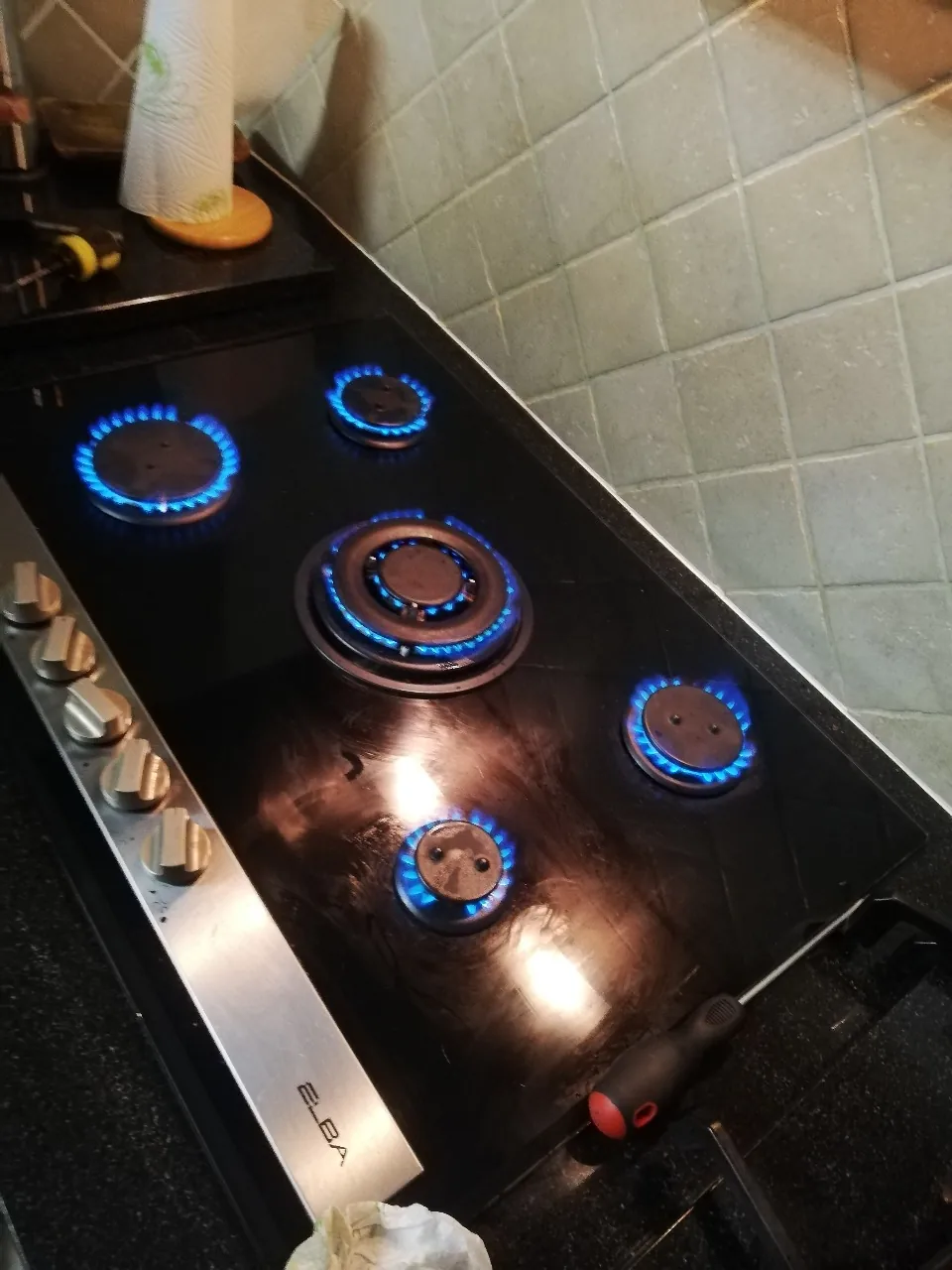
Gas cooker ignition diagnosis
When a burner clicks repeatedly but does not establish a flame, the sound confirms only that an ignition sequence is being attempted. It does not prove that gas is reaching the burner, that the spark is occurring at the correct point or that the safety controls are operating normally. The correct repair depends on which burner fails and on the appliance design.
One burner fails while the others work
A single-ring complaint narrows the useful observations: whether a spark is visible, whether the burner cap was recently removed and whether liquid has entered the control area. Moisture after cleaning can coincide with persistent clicking, but a broken electrode, failed switch or unsuitable burner alignment may produce similar symptoms. A technician must inspect the installed hardware rather than rely on a universal replacement part.
All burners click without ignition
When multiple rings suddenly stop lighting, the cause may relate to the available gas supply, a shared electrical supply or the appliance ignition system. These possibilities need to be distinguished safely. Do not loosen the connection, attempt to test a hose for gas release or make gas-valve adjustments. If there is any gas smell, the situation is no longer a routine ignition repair: leave the affected area and seek emergency assistance.
Spark is present but flame goes out
If a burner lights momentarily and extinguishes when the control is released, flame supervision can be involved. A thermocouple or another manufacturer-specific safety component may be implicated, but it is unsafe to force the knob open or defeat that device. Explain the exact behaviour to the service team, including whether it started after a spill or component replacement.
What a proper repair visit should establish
A qualified assessment should identify the model, check the ignition path, consider burner condition, distinguish electrical from gas-side problems and confirm safe functioning after any authorised work. A repair may require a compatible electrode, wiring component or control assembly, but parts are selected only once the fault is established. Tell us which rings are affected and send a model-label photo if safe to obtain.
Questions that help separate the causes
Listen carefully to whether the click is rhythmic or continuous; do not bring your face or a flame close to the burner to inspect it. If the ignition sparks at other rings, record that distinction. The service team also needs to know whether the problem began immediately after cleaning, after the appliance was moved, or following an electrical outage. None of those histories is a diagnosis by itself. For built-in models, access around the controls and underneath the worktop can determine the safe method of inspection, which should be planned before anyone loosens parts.
What happens after a fault is found
The technician should identify the precise appliance and ignition design, explain the defective part or unsafe condition, and check whether an approved replacement is obtainable. If the gas supply or combustion conditions are implicated, the assessment must extend beyond an electrical spark check. A working spark after reassembly is not enough by itself; safe flame establishment and shutoff behaviour are part of a proper return-to-service decision. Ask what was checked and what symptoms would justify another inspection.
Professional repair and related reading
For an appliance-specific service assessment, visit Gas Stove Repairs. Further reading: Gas Burner Lights Then Goes Out, Yellow Gas Hob Flame or Soot: When to Stop Using It.
Questions about this service
Should I keep holding the knob until it lights?
Do not continue repeated attempts when ignition is unsuccessful, particularly if gas may be accumulating. Follow the appliance safety instructions and seek qualified help.
Could cleaning have caused the fault?
Moisture or displaced burner parts can be associated with clicking, but a damaged ignition circuit may produce the same symptom.
Is clicking always a problem with the sparker?
No. The symptom does not establish whether the gas supply, ignition hardware or flame supervision is at fault.